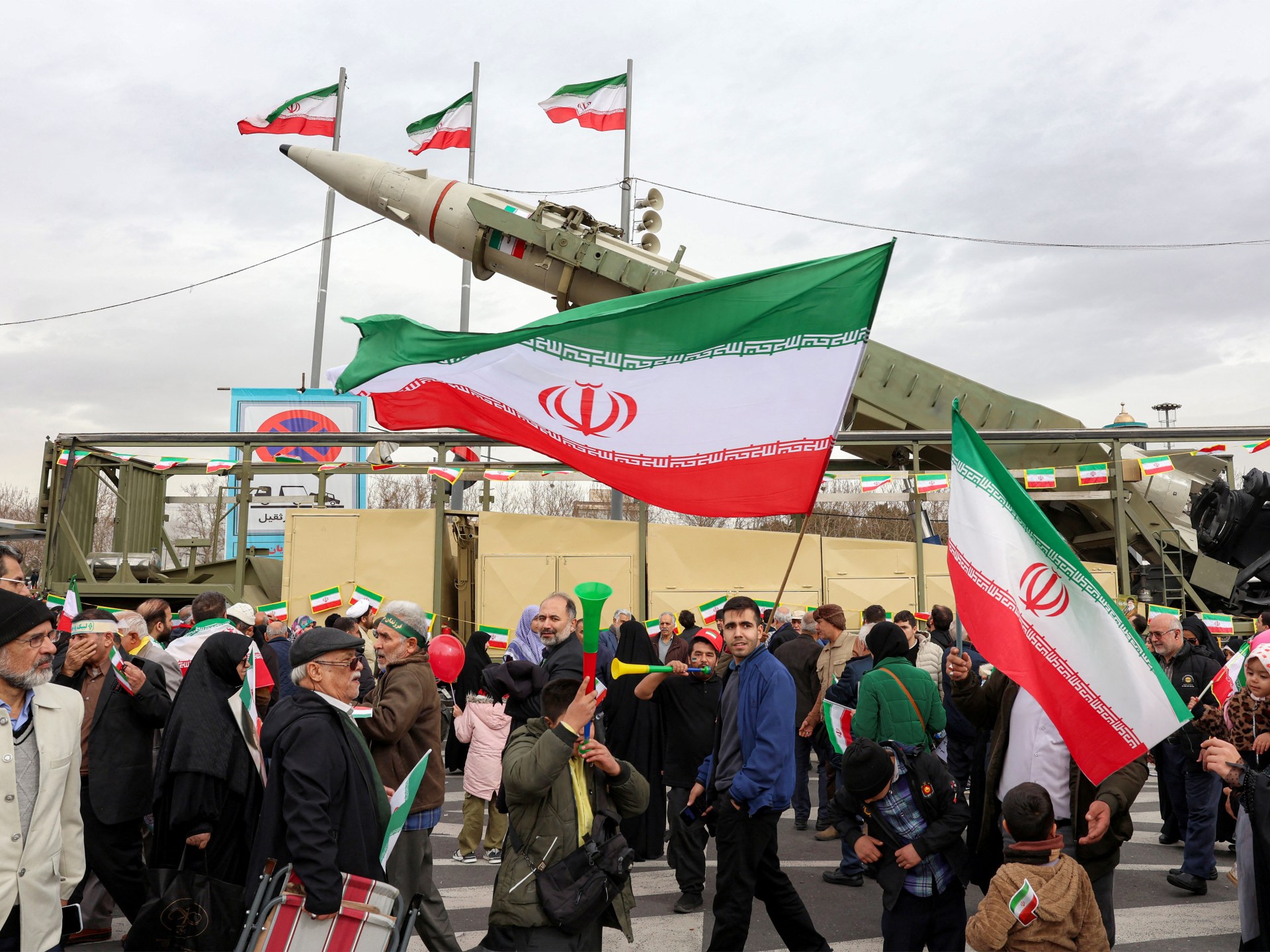
US-Iran Talks Fail: Middle East Braces for Conflict Amid Military Threat
The fragile hope for a diplomatic breakthrough between the United States and Iran has once again dimmed, leaving the Middle East teetering on the brink of potential conflict. Following one of the most "intense" rounds of negotiations in Geneva, officials confirmed no deal was reached regarding Iran's controversial nuclear capabilities. This diplomatic stalemate underscores profound disagreements and raises serious questions about the immediate future of one of the world's most volatile regions. The immediate **us iran talks impact** is a palpable increase in regional tension, fueled by a significant military buildup and escalating rhetoric from both sides.
While "further progress" in diplomatic engagement was acknowledged and a "mutual understanding" for "additional talks" was reached, the underlying dissatisfaction is clear. U.S. President Donald Trump, expressing his impatience, stated, "I'm not happy with the fact that they are not willing to give us what we have to have." This sentiment, coupled with Iran's firm stance on its sovereign rights and defense preparedness, paints a grim picture for a swift resolution.
A Diplomatic Dead End: The Core Stumbling Blocks
The inability to bridge the divide in Geneva highlights several entrenched issues that continue to derail any meaningful progress. These aren't merely technical disagreements but represent fundamental clashes of national interest and ideology.
Nuclear Ambitions: The Unyielding Frontier
At the heart of the impasse lies Iran's nuclear program. Washington remains deeply concerned about Tehran's alleged pursuit of nuclear weapons, a fear articulated by President Trump in his State of the Union address. He accused Iran of restarting "sinister ambitions" and developing missiles that could potentially reach the United States. Such claims are vehemently rejected by Iran, which maintains its nuclear program is for peaceful purposes. Iranian officials swiftly dismissed Trump's accusations as "big lies," further hardening positions and making mutual trust a distant prospect.
The international community watches with bated breath, understanding that the implications of unchecked nuclear proliferation in the region would be catastrophic. The persistent failure to secure a verifiable agreement on nuclear safeguards remains the most critical **us iran talks impact**, fostering an environment of suspicion and accelerating the risk curve.
Military Posturing: A Region on Edge
Compounding the diplomatic failure is the increasingly visible military readiness on both sides. The U.S. has significantly bolstered its military presence in the Middle East in recent weeks, a move interpreted by many as a clear warning. Iranian officials have responded with their own warnings, with one senior official stating that because American bases are "scattered in different places of the region, then unfortunately, perhaps, the whole region would be engaged" in any conflict. He affirmed Iran's preparedness for "both options—war and peace."
This exchange of threats and military deployments creates a dangerous feedback loop, where each side's defensive posture is seen as an aggressive provocation by the other. The shadow of past U.S. strikes on Iranian nuclear sites serves as a stark reminder of the potential for military action, transforming diplomatic discussions into high-stakes negotiations backed by the implicit threat of force.
Echoes of Conflict: Warnings and Retaliations
The rhetoric emanating from both Washington and Tehran leaves little room for ambiguity regarding the stakes involved. President Trump's "not happy" with the talks signifies his administration's mounting impatience, while his insistence that Iran "cannot have nuclear weapons" outlines a non-negotiable red line. The threat of military action, if "certain requirements aren't met," hangs heavy in the air, echoing the readiness for confrontation.
The Human Cost: Protests and Repression
Beyond the geopolitical chess match, the internal situation in Iran also casts a long shadow over diplomatic efforts. The January uprising against the Iranian regime, which reportedly saw security forces kill tens of thousands of protesters, has drawn international condemnation. President Trump highlighted these figures, claiming Iran "killed at least 32,000 protesters," a figure Iran has disputed.
The human rights aspect intensified with reports from the U.N. high commissioner for human rights, Volker Türk, who expressed horror over death sentences issued to at least eight individuals, including two children, in connection with the protests, with another 30 reportedly at risk. Türk urged for "independent, impartial, and transparent investigations, fair trial guarantees, and an immediate moratorium on the death penalty." He added, "I am extremely alarmed about the potential for regional military escalation and its impact on civilians. I hope the voice of reason prevails." This internal repression not only fuels international pressure on Iran but also hardens the resolve of nations like the U.S., making a comprehensive deal even more challenging and expanding the negative **us iran talks impact** to include humanitarian concerns.
The Broader Regional and Global Implications
The failure of US-Iran talks extends far beyond the immediate parties, threatening to unleash a cascade of destabilizing effects across the Middle East and beyond.
Instability in the Middle East
A military confrontation between the U.S. and Iran would plunge the already volatile Middle East into unprecedented turmoil. The region, a critical artery for global oil supplies, would likely see disrupted shipping lanes, skyrocketing energy prices, and intensified proxy conflicts. Neighboring countries, some with close ties to either the U.S. or Iran, would find themselves drawn into the fray, risking widespread humanitarian crises and mass displacement. The UN's concern for "regional military escalation and its impact on civilians" is a stark warning that regional actors must heed, preparing contingency plans and redoubling diplomatic efforts to prevent outright conflict.
Geopolitical Ripple Effects
The geopolitical consequences would ripple across the globe. Major powers like Russia, China, and European Union nations, all with significant economic and strategic interests in the Middle East, would face immense pressure to navigate a crisis that could redefine international alliances and global energy security. This isn't merely a bilateral dispute; it's a test of international diplomacy and collective security mechanisms, underscoring how deeply interwoven the **us iran talks impact** is with global stability.
What's Next? A Precarious Path Forward
Despite the current deadlock, the commitment to "additional talks" suggests a thin thread of diplomacy remains. Both sides appear to understand that a complete breakdown of communication carries unacceptable risks. However, President Trump's "restlessness" and his demand for "what we have to have" indicate that these future discussions will likely be fraught with tension and high expectations.
The current situation is a high-stakes waiting game, where the pronouncements of leaders and the movements of military assets will be closely scrutinized. The immediate **us iran talks impact** is a period of heightened uncertainty and risk, where every diplomatic move and military maneuver carries the potential to either de-escalate tensions or ignite a broader conflagration. It's crucial for international observers to closely monitor statements from key officials and military deployments as they will serve as vital indicators of future actions.
For a deeper dive into the immediate aftermath and the concerns voiced by the U.S. President, read more about
Failed US-Iran Talks Escalate War Fears, Trump Unhappy. To understand the broader context of the nuclear standoff, explore
US-Iran Nuclear Standoff: No Deal, High Stakes, Future Unclear.
In conclusion, the failure of the recent US-Iran talks marks a significant setback for diplomatic efforts and dramatically elevates the risk of conflict in the Middle East. With both sides engaged in military posturing and firm on their respective demands, the prospects for a peaceful resolution appear increasingly dim. The profound **us iran talks impact** is a testament to the complexities of international relations and the enduring challenges of navigating geopolitical rivalries in an already unstable region. The world watches, hoping that despite the ominous warnings, the voice of reason will ultimately prevail.